
Spain Civil Registry for Foreign Families: 2026 Guide
Learn how Spain's digital Civil Registry works in 2026 for foreign families, including births, marriages, official certificates and the former Family Book.
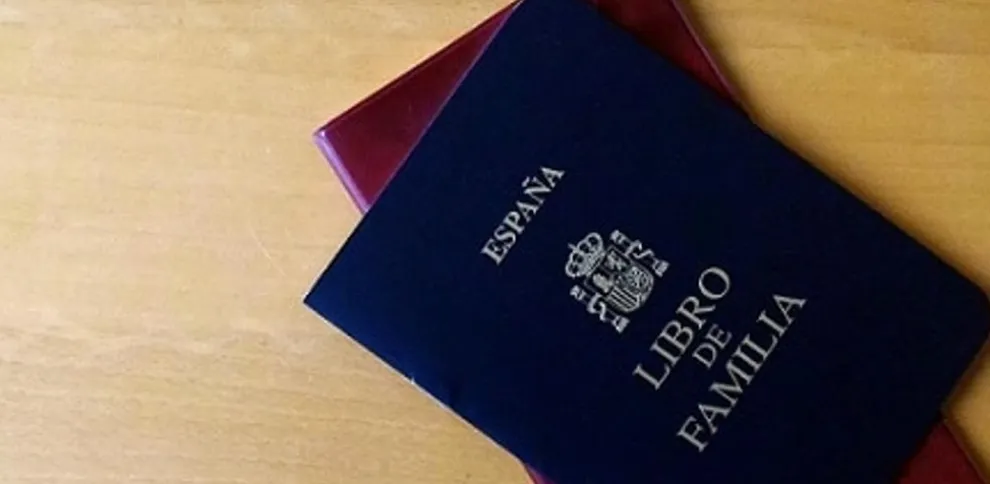 Digital records forming a family structure.
From the physical Family Book to the digital registry
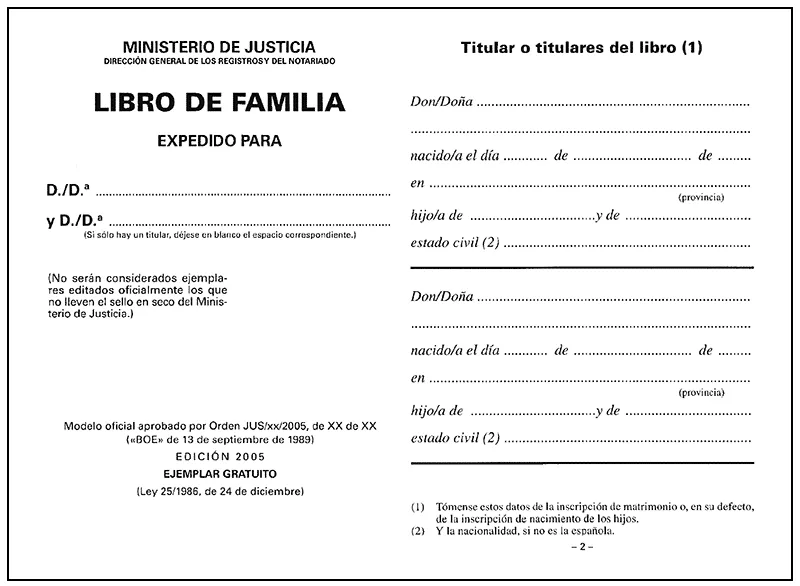
For more than a century, the Family Book (Libro de Familia) was a central document for Spanish households, recording important family events. Since the full entry into force of the 2011 Civil Registry Law (Ley del Registro Civil de 2011), this physical document is no longer issued in Spain. Many families therefore ask what has replaced it. The answer is a digital registry system.
The change is intended to modernise and unify administrative management. If you still have an old Family Book, it remains valid for proving family relationships in most procedures. New events such as births or marriages are no longer added to it.
The new system is based on the individual record (registro individual). This is a single digital record for each person in which civil-status events are entered chronologically. For foreign residents, the system centralises information in one database accessible from anywhere in Spain, which reduces paperwork, in-person visits and reliance on a physical family document.
Understanding the digital individual record
 Digital Civil Registry interface in Spain.
The digital Civil Registry (Registro Civil) in Spain focuses on each person rather than a shared family book. This system is consolidated in 2026 and is intended to improve the security and efficiency of personal information management.
What is the individual record?
When a person is first registered in the Civil Registry, normally at birth or when acquiring nationality, they receive a unique Personal Code (Código Personal). This code identifies their registry record (hoja registral), a personal digital history in which life events are recorded sequentially, including birth, marriage, divorce, nationality and death.
How are family relationships represented now?
Family relationships are recorded through links between individual records. When two people marry, their registry records are connected through the marriage entry. When a birth is registered, the child's record is linked with those of the parents. Legal proof of these relationships is provided through an official certificate (certificación) requested from the digital system.
Essential tools for online access
To deal with Spanish public authorities online, including the Civil Registry, the two key tools are a digital certificate (Certificado Digital) and Cl@ve. They allow secure access to personal information and online procedures. For more general information, see our first steps for immigration procedures (in Spanish).
Document review included · until November 30
Have an immigration process coming up?
We advise you and help with your case.
On a video call, a lawyer looks at your case, tells you what you need to do and how to apply with confidence. If we then handle the application for you, the consultation is free.

Constanza Rossi Vibbot
Licensed lawyer ICAB no. 49.586 · Immigration
Online service · All of Spain and abroad
Key registration procedures for foreign nationals
The digital system standardises registration procedures, although it is important to follow the correct steps. These are common procedures for foreign families.
Registering a marriage involving a foreign national
To register in Spain a marriage involving a foreign national where the marriage was celebrated in Spain, it must be entered in the Civil Registry corresponding to the place of the ceremony. The usual steps are:
- Book an appointment at the Civil Registry.
- Both spouses attend with the necessary documents: valid passports, a municipal registration certificate (certificado de empadronamiento) and their NIE or TIE (in Spanish).
- Submit the original marriage record.
Once completed, the marriage is registered and the digital link between the spouses' individual records is created.
Registering the birth of a child of foreign parents
For a child born in Spain to foreign parents, the process is often started at the hospital. Many healthcare centres notify the Civil Registry electronically. If that does not happen, the parents must:
- Attend the Civil Registry for the place of birth within the legally established period.
- Submit the yellow birth declaration form provided by the hospital.
- Provide both parents' identity documents, passport and NIE/TIE.
This registration is important for a later residence application for the child, including situations covered by family residence through roots (in Spanish).
Legalising foreign documents
Any foreign certificate, such as a birth, marriage or criminal-record certificate, must be properly legalised to be accepted in Spain. This involves two essential requirements: it must carry the Hague Apostille (Apostilla de La Haya) and be translated into Spanish by a sworn translator (traductor jurado) authorised by Spain's Ministry of Foreign Affairs (Ministerio de Asuntos Exteriores). Without both elements, the document has no legal validity.
Which immigration procedure do you need to sort out? Tell the lawyer
The lawyer reads your case and tells you how to proceed: a consultation to review it with your documents, or we handle the whole application for you.
Want to know what to do right away?
On a video call the lawyer reviews your documents and gives you a plan for your case.
Book your consultationHow to request civil-status certificates online
 Structured process for obtaining digital certificates.
Proof of civil status or family relationships is now provided through certificates. The direct online route is the Ministry of Justice Electronic Office (Sede Electrónica del Ministerio de Justicia).
The general process is:
- Identify yourself: access the portal using your digital certificate or Cl@ve.
- Find the procedure: go to "Trámites" and select "Certificados de Registro Civil".
- Choose the certificate: select the type you need, such as birth or marriage.
- Complete the form: enter the details of the person whose certificate you are requesting. Have the full names, dates and exact places available.
It is important to request the correct type of certificate. For most important procedures, such as applying for nationality or getting married, you need an online full birth certificate (certificado literal de nacimiento online), which reproduces the full registration. An extract certificate is a summary and may not be sufficient. For more information, see our administrative procedure guides (in Spanish).
The document is usually received as a PDF with a Secure Verification Code (Código Seguro de Verificación, CSV) that allows authorities to verify its authenticity online.
Comparison of Civil Registry certificates
| Feature | Full certificate | Extract certificate |
|---|---|---|
| Content | Complete literal copy of the registry entry | Official summary of the registry information |
| Common uses | Nationality applications, marriage proceedings, inheritances, court proceedings | Information purposes, simple administrative procedures, school enrolment |
| Level of detail | Includes all marginal notes and amendments | Contains only the essential details of the registered event |
| Recommendation | Always request this for important legal or administrative procedures | Sufficient only where a complete record is not expressly required |
Common challenges and practical solutions
Although the digital system is more efficient, foreign nationals can still face some obstacles:
- Obtaining the digital certificate: the Digital Certificate is a file installed in your browser. The process begins online on the website of the Spanish Royal Mint, FNMT (Fábrica Nacional de Moneda y Timbre), and it requires in-person identity verification at a registration office.
- Legalisation of documents: this is a frequent source of problems. Documents from your country of origin, such as birth and marriage certificates, must have a Hague Apostille and a sworn Spanish translation by a sworn translator in Spain. Without this, your procedures will stall.
- Processing times: although the digital Civil Registry can make enquiries faster, first registrations, such as a marriage celebrated abroad, can take weeks or months. Workloads vary between Civil Registry offices, so planning ahead is advisable.